


Last updated:
Cape Town is the kind of city that makes other cities feel dull. One morning you are riding a cable car to the top of a flat-topped mountain, by lunch you are watching African penguins waddle across a beach, and by sunset you are sipping coffee on a cliff road where the Atlantic crashes 100 metres below.
If you are searching for the best places to visit in Cape Town, this guide gives you everything in one place: the famous icons, the hidden local favourites, the best neighbourhoods to live and stay in, real 2026 entry prices, and a simple 3-day itinerary you can copy.
Unlike most lists, we have grouped every spot by area, so you can plan your days around geography instead of zig-zagging across the city in traffic.
Quick facts before you go:
- Nickname: The Mother City
- Currency: South African Rand (ZAR / R)
- Best time to visit: November to March (dry, sunny summer)
- Days needed: 3 days minimum, 5–7 days ideal
- Getting around: Uber/Bolt, MyCiTi bus, or a rental car for the peninsula
Places in Cape Town: Must-See Spots at a Glance
Short on time? Here is the full list in one table. Bookmark it, then scroll down for the details, tips, and photos of each place.
| Sr. # | Place | Area | Best For | Cost |
| 1 | Table Mountain | City Bowl | Views, hiking | Paid (cable car) / free hike |
| 2 | Lion’s Head | City Bowl | Sunrise & sunset hike | Free |
| 3 | Signal Hill | City Bowl | Easy sunset viewpoint | Free |
| 4 | V&A Waterfront | Waterfront | Food, shopping, families | Free entry |
| 5 | Robben Island | Table Bay | History | Paid |
| 6 | Bo-Kaap | City Centre | Colourful streets, culture | Free |
| 7 | Company’s Garden | City Centre | Relaxing, museums | Free |
| 8 | Kirstenbosch Gardens | Southern Suburbs | Nature, picnics | Paid |
| 9 | Camps Bay & Clifton | Atlantic Seaboard | Beaches | Free |
| 10 | Sea Point Promenade | Atlantic Seaboard | Walking, cycling | Free |
| 11 | Chapman’s Peak Drive | Hout Bay | Scenic drive | Toll |
| 12 | Boulders Beach | Simon’s Town | Penguins | Paid |
| 13 | Cape Point | Cape Peninsula | Cliffs, lighthouse | Paid |
| 14 | Kalk Bay | False Bay | Harbour, seafood | Free |
| 15 | Muizenberg | False Bay | Surfing, beach huts | Free |
| 16 | Hidden gems & day trips | Various | Culture, wine, markets | Mixed |
Places in Cape Town, South Africa: The Iconic City Spots
Cape Town sits at the southwestern tip of South Africa, squeezed between mountains and two oceans. Most first-time visitors spend their first day or two in the City Bowl, the natural amphitheatre formed by Table Mountain, Lion’s Head, and Signal Hill. These are the places that put Cape Town on every bucket list.
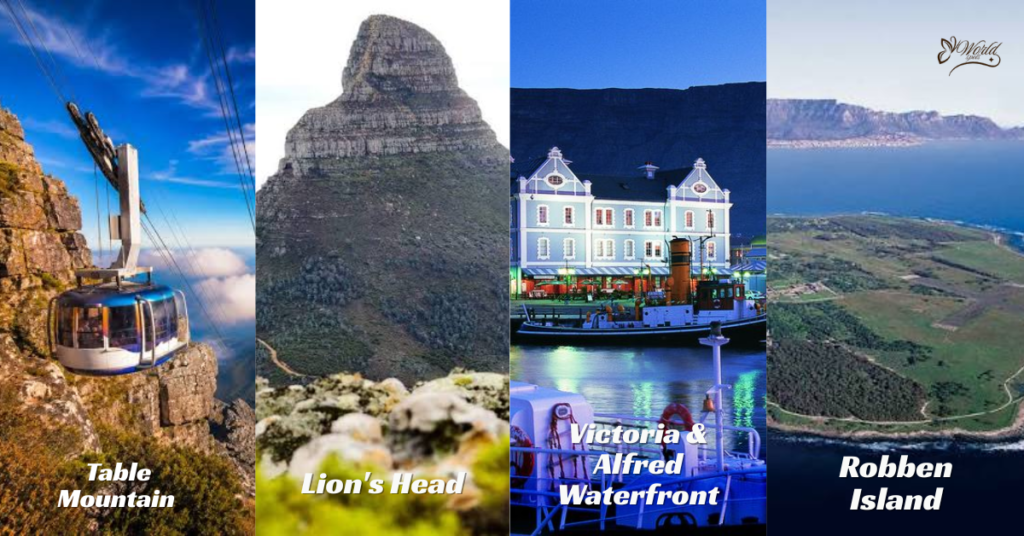
Mountains and Viewpoints
i- Table Mountain
Table Mountain is the symbol of the city and one of the New 7 Wonders of Nature. You can reach the 1,085-metre summit in two ways:
- The Aerial Cableway: a 5-minute ride in a rotating cable car. Buy tickets online, as prices are lower than at the ticket office and queues are shorter.
- Hiking: the most direct route is Platteklip Gorge (about 2–3 hours up). It is steep but well-marked. More scenic routes like India Venster and Skeleton Gorge are best done with a guide.
Pro tip: The cableway closes in strong wind or thick cloud (locals call the cloud the “tablecloth”). Check the official cableway app on the morning of your visit, and go on the first clear day of your trip rather than saving it for the end.
ii- Lion’s Head
Lion’s Head is the hike locals love most. The trail spirals around the peak and ends with a short section of chains and ladders near the top. Allow 2–3 hours return.
Go for sunrise for quieter trails, or join the famous full-moon hike crowd for sunset. Always hike in a group, carry a headlamp, and do not attempt the chain section if you are uncomfortable with heights; there is an alternative path around it.
iii- Signal Hill
Not a hiker? Signal Hill gives you a similar panorama with zero effort. You can drive almost to the top and watch the sun drop into the Atlantic, with Robben Island visible in the distance. Bring a blanket and snacks; this is one of the best free things to do in Cape Town.
iv- Camps Bay and Clifton Beaches
Camps Bay is the glamorous beach with palm trees, white sand, and the Twelve Apostles mountain range behind it. Just north, the four Clifton beaches are sheltered from the wind and reached by steep staircases. For an easier photo stop, try Maiden’s Cove between the two.
Heads-up: The Atlantic water is cold, often around 12–16°C, even in summer. Come for the sunbathing and sunsets; save the swimming for False Bay.
Waterfront and History
i- Victoria & Alfred Waterfront
The Victoria & Alfred Waterfront is a working harbour turned into Cape Town’s busiest leisure hub. Inside one walkable area, you will find:
- The Two Oceans Aquarium (great for families)
- Zeitz MOCAA, the largest museum of contemporary African art, inside a converted grain silo
- The Cape Wheel for city views
- Harbour and seal cruises
- Food markets, restaurants, and shopping
It is also one of the safest areas in the city to walk around in the evening.
ii- Robben Island
Ferries leave from the Nelson Mandela Gateway at the Waterfront for Robben Island, the UNESCO World Heritage Site where Nelson Mandela was imprisoned for 18 years. The tour includes a bus ride around the island and a walk through the maximum-security prison, often guided by a former political prisoner.
Book through the official Robben Island Museum channel well in advance; tours sell out in summer, and ferries are cancelled in rough seas.
Culture in the City Centre
i- Bo-Kaap
Bo-Kaap is the neighbourhood of brightly painted houses you have seen all over Instagram. But it is far more than a photo spot. It is the historic heart of the Cape Malay community, with cobbled streets, mosques, and some of the best Cape Malay cuisine in the country. Visit the Bo-Kaap Museum, or better still, join a local cooking class to learn how to make samoosas and curry.
Please be respectful: these are people’s homes, so avoid blocking doorways for photos.
ii- Company’s Garden and the Museum Mile
Company’s Garden was planted in the 1650s to supply passing ships with fresh produce. Today it is a shady green park with squirrels, rose gardens, and views of Table Mountain. Around it you will find the Iziko South African Museum, the South African National Gallery, and the Slave Lodge, making it easy to combine nature and history in one morning.
iii- Kirstenbosch National Botanical Garden
On the eastern slopes of Table Mountain, Kirstenbosch is often called one of the most beautiful gardens in the world. Do not miss the Boomslang, a curved steel-and-timber canopy walkway that snakes through the treetops. In summer, the garden hosts Sunday sunset concerts on the lawns. Pack a picnic and spend at least half a day here.
a- Woodstock Street Art and the Old Biscuit Mill
Once an industrial zone, Woodstock is now Cape Town’s creative district. Wander the streets for large-scale murals, then head to the Neighbourgoods Market at the Old Biscuit Mill on Saturday mornings for artisanal food and design stalls.
b- District Six Museum
This small but powerful museum tells the story of District Six, a vibrant mixed-race neighbourhood whose residents were forcibly removed under apartheid. It is essential context for understanding modern Cape Town.
c- Castle of Good Hope
Built in the 1600s, the Castle of Good Hope is the oldest surviving colonial building in South Africa. Visit for its pentagonal walls, military museum, and changing-of-the-guard ceremony.
d- Silvermine Nature Reserve
Want a quiet hike away from the crowds? Silvermine offers gentle trails through fynbos, the unique shrubland of the Cape Floral Kingdom, plus a reservoir for a summer swim.
e- Langa Township Tour
Langa is Cape Town’s oldest township. Choose a community-run tour where income goes back to local projects, and you will learn about music, food, and daily life from the people who live there.
Places in Cape Town to Live: Best Neighbourhoods for Locals and Long Stays
Many readers ask us where to live in Cape Town, whether they are relocating, working remotely, or planning a digital nomad stay of a few months. The city has very different personalities depending on the suburb. Here is a quick breakdown.
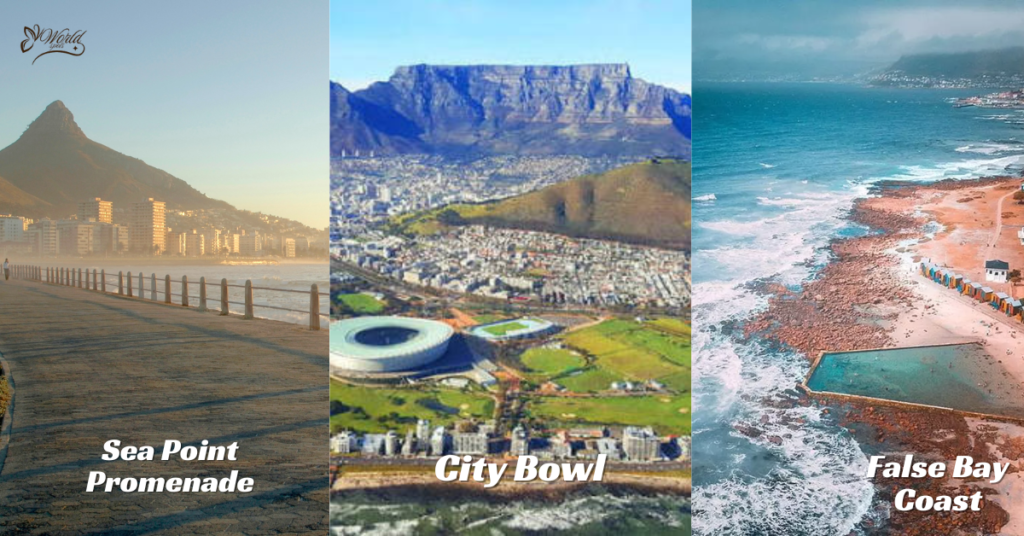
1- Atlantic Seaboard
Sea Point and Green Point
Sea Point is popular with young professionals and remote workers. You get the 11 km Sea Point Promenade for morning runs, cafés on every corner, good public transport, and quick access to the city centre. Green Point next door offers the stadium park and easy Waterfront access.
Good for: walkability, ocean views, an active lifestyle.
2- City Bowl
Gardens, Tamboerskloof, and Oranjezicht
These leafy suburbs sit right under Table Mountain. Expect Victorian houses, trendy restaurants along Kloof Street, and hiking trails on your doorstep. The Oranjezicht City Farm Market on Saturdays is a local favourite.
Good for: couples, creatives, and anyone who wants city living with mountain access.
3- Southern Suburbs
Rondebosch, Newlands, and Claremont
Greener, quieter, and close to top schools and the University of Cape Town. Newlands is famous for its rugby and cricket stadiums and its forest walks.
Good for: families and students.
4- False Bay Coast
Muizenberg and Kalk Bay
Laid-back seaside villages with a strong community feel, warmer water than the Atlantic side, and a slower pace of life. They are further from the city centre (about 30–40 minutes by car), but many people find the trade-off worth it.
Good for: surfers, artists, and people who want a village lifestyle
Best Time to Visit Cape Town
| Season | Months | What to Expect |
| Summer | Dec–Feb | Hot, dry, busy; strong “Cape Doctor” south-easterly wind |
| Autumn | Mar–May | Warm days, fewer crowds; the sweet spot |
| Winter | Jun–Aug | Cool and rainy; low prices; whale season begins |
| Spring | Sep–Nov | Wildflowers on the West Coast, whales in False Bay |
For beaches and hiking, aim for November to April. For lower prices and whale sightings, consider September or October.
How to Get Around Cape Town
- Uber and Bolt: affordable, widely available, and the easiest option for most visitors.
- MyCiTi bus: a reliable public bus network covering the city, Atlantic Seaboard, and airport.
- Hop-on hop-off bus: convenient for first-timers, with routes covering the main attractions.
- Car rental: the best choice for the Cape Peninsula and Winelands. Remember, South Africans drive on the left.
Safety tip: Like any big city, Cape Town requires common sense. Do not walk alone at night in quiet areas, keep valuables out of sight, and hike popular trails in groups during daylight.
3-Day Cape Town Travel Plans
Day 1: City and Mountains
- Morning: Table Mountain (cable car or hike)
- Afternoon: Bo-Kaap and Company’s Garden
- Evening: Sunset at Signal Hill, dinner at the V&A Waterfront
Day 2: Cape Peninsula Road Trip
- Morning: Chapman’s Peak Drive via Hout Bay
- Midday: Cape Point and the Cape of Good Hope
- Afternoon: Penguins at Boulders Beach
- Evening: Seafood in Kalk Bay
Day 3: Gardens, Wine, and History
- Morning: Robben Island tour
- Afternoon: Kirstenbosch Gardens, then wine tasting in Constantia
- Evening: Sunset walk on the Sea Point Promenade
Frequently Asked Questions About Places to Visit in Cape Town
What is the number one place to visit in Cape Town?
Table Mountain is the top attraction in Cape Town. Take the cable car or hike up for panoramic views over the city, Robben Island, and both coastlines.
How many days do you need in Cape Town?
Three days cover the highlights: the city, the Cape Peninsula, and Robben Island or the Winelands. With 5 to 7 days, you can add day trips to Stellenbosch, Franschhoek, or Hermanus without rushing.
What are the best free places to visit in Cape Town?
Lion’s Head, Signal Hill, Bo-Kaap, Company’s Garden, the Sea Point Promenade, Camps Bay, Muizenberg, and Kalk Bay are all free to visit.
Is Cape Town safe for tourists?
Cape Town is generally safe in tourist areas such as the V&A Waterfront, City Bowl, and Atlantic Seaboard if you take normal big-city precautions. Use Uber at night, avoid isolated areas, and hike in groups.
Can you swim at Cape Town beaches?
Yes, but the Atlantic side (Camps Bay, Clifton) is very cold. For warmer water, head to False Bay beaches such as Muizenberg, St James, and Boulders.
What is the best area to stay in Cape Town for first-time visitors?
The V&A Waterfront and the City Bowl are the best choices for first-timers because they are central, walkable, and close to most major attractions.
Where is the best place to see penguins in Cape Town?
Boulders Beach in Simon’s Town is the best place to see African penguins. Stony Point in Betty’s Bay is a quieter alternative about 1.5 hours away.
Final Thoughts: Start Planning Your Cape Town Trip
From the summit of Table Mountain to the penguins of Boulders Beach and the wine cellars of Constantia, the places to visit in Cape Town offer a mix of nature, history, and culture that few cities in the world can match.
Start with the icons, leave room for at least one hidden gem, and always keep a flexible weather day in your plan. Cape Town rewards travellers who slow down.

